Considerate service
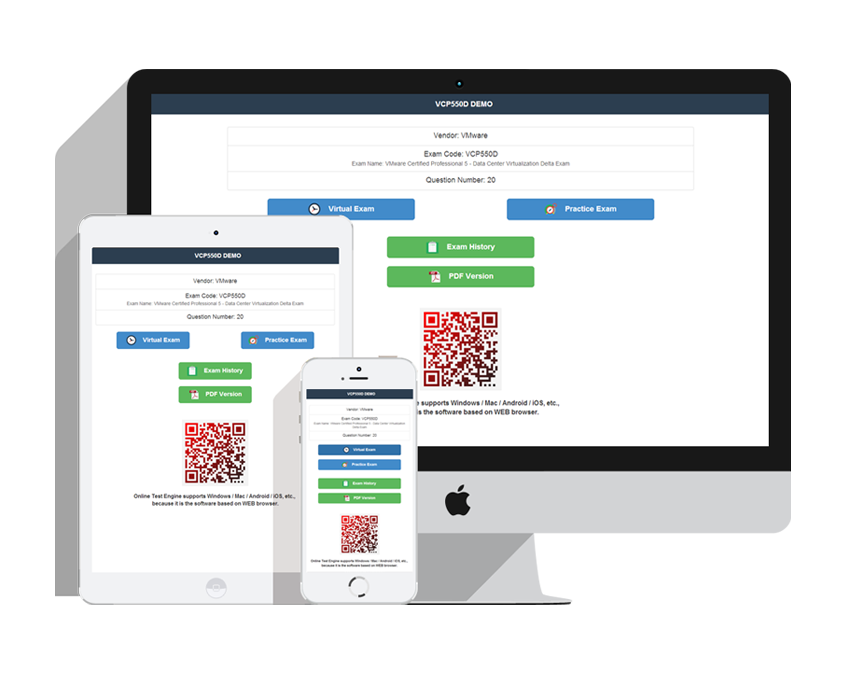
Before you placing your order, you can download the demo freely for you reference. After you purchasing the CompTIA Cloud+ Certification Exam (CV0-001日本語版) exam study material, you can download them instantly, and proceed with the preparations as soon as possible. We are here to solve your problems about CompTIA CompTIA Cloud+ Certification Exam (CV0-001日本語版) exam study material. What is more, it is an obvious manifestation in aftersales services. The employees are waiting for providing help for you 24/7. One year later, if you want to buy our exam study material. We give your even more beneficial discounts, which is quite user-friendly. Last but not the least, we give back your full refund if you failed the test unluckily. There are two choices for you---get your full money.
At last, hope your journey to success is full of joy by using our CompTIA Cloud+ Certification Exam (CV0-001日本語版) exam study material and have a phenomenal experience.
CompTIA CV0-001日本語 braindumps Instant Download: Our system will send you the CV0-001日本語 braindumps file you purchase in mailbox in a minute after payment. (If not received within 12 hours, please contact us. Note: don't forget to check your spam.)
The irreplaceable products get amazing feedback
The exam study material has remarkable accuracy and a range of sources for you reference. All contents are necessary knowledge you need to know with curt layout and pattern, and the CompTIA CompTIA Cloud+ Certification Exam (CV0-001日本語版) exam study material are good dry-run before you attending the real test. So the customers get high passing rate by CompTIA Cloud+ Certification Exam (CV0-001日本語版) exam study material. We provide a wide range of knowledges related to the exam to exam candidates, and they reach a consensus that our CompTIA Cloud+ Certification Exam (CV0-001日本語版) exam study material is a useful way to pull up the test score and a useful help to hold life in the palm of their hand.
Analogue of real test
One thing need to be clear, we all born with comparable intelligence, but why some conquer the test while others fail? It is not about some congenital things. Actually, it is because the winner who gets the right way compared with others. To our exam candidates, CV0-001日本語 exam study material is the right material for you to practice. After purchasing our CompTIA Cloud+ Certification Exam (CV0-001日本語版) exam study material, you will absolutely have a rewarding and growth-filled process, and make a difference in your life.
CompTIA Cloud+ Exam Certification Details:
| Passing Score | 750 / 900 |
| Books / Training | CompTIA Cloud+ CV0-001 |
| Duration | 90 mins |
| Number of Questions | 100 |
| Sample Questions | CompTIA Cloud+ Sample Questions |
| Exam Name | CompTIA Cloud+ |
| Schedule Exam | CompTIA Marketplace |
| Exam Code | CV0-001 |
| Exam Price | $294 (USD) |
Reference: https://certification.comptia.org/certifications/cloud
Dear customers, welcome to browse our products. You may have no ideas who we are, but one thing is clear: the awareness to pass the test bringing us together. So you can totally think of us as friends to help you by introduce our CompTIA Cloud+ Certification Exam (CV0-001日本語版) exam study material. It is a modern changing world, so getting a meaningful certificate is becoming more and more popular. However, at present, there are so many similar materials in the market but of little use, which squander your time and money. Here let me enumerate some features of the CompTIA Cloud+ Certification Exam (CV0-001日本語版) exam study material for you:

CompTIA CV0-001 Exam Syllabus Topics:
| Topic | Details |
|---|---|
| Cloud Concepts and Models 12% | |
| Compare and contrast cloud services. | 1. SaaS (according to NIST)2.IaaS (according to NIST) 3.PaaS (according to NIST) 4.CaaS 5.XaaS 6. DaaS 7.BPaaS 8. Accountability and responsibility based on service models |
| Compare and contrast cloud delivery models and services. | 1. Private2. Public 3. Hybrid 4. Community 5. On-premise vs. off-premise hosting 6. Accountability and responsibility based on delivery models 7.Security differences between models
9. Orchestration platforms |
| Summarize cloud characteristics and terms. | 1. Elasticity2. On-demand self-service/just-in-time service 3. Pay-as-you-grow 4. Chargeback 5. Ubiquitous access 6. Metering resource pooling 7. Multi-tenancy 8. Cloud bursting 9. Rapid deployment 10. Automation |
| Explain object storage concepts. | 1. Object ID2. Metadata 3. Data/blob 4. Extended metadata 5. Policies 6. Replicas 7. Access control |
| Virtualization 19% | |
| Explain the differences between hypervisor types. | 1.Type I and Type II
3.Consumer vs. enterprise use
|
| Install, configure and manage virtual machines and devices. | 1. Creating, importing and exporting template and virtual machines 2.Install guest tools
4.Image backups vs. file backups 5.Virtual NIC
|
| Given a scenario, perform virtual resource migration. | 1. Establish requirements2. Maintenance scheduling 3. Reasons
6. Physical to Virtual (P2V) 7. Virtual to Virtual (V2V) 8. Virtual to Physical (V2P) |
| Explain the benefits of virtualization in a cloud environment. | 1. Shared resources2. Elasticity
4. Infrastructure consolidation 5. Virtual datacenter creation |
| Compare and contrast virtual components used to construct a cloud environment. | 1.Virtual network components
3. Virtual CPU 4.Storage virtualization
|
| Infrastructure 21% | |
| Compare and contrast various storage technologies. | 1.Network Attached Storage (NAS)
|
| Explain storage configuration concepts. | 1.Disk types
|
| Execute storage provisioning. | 1. Creating LUNs2. Creating network shares 3. Zoning and LUN masking 4.Multipathing 5. Implications of adding capacity to a NAS and SAN
|
| Given a scenario, implement appropriate network configurations. | 1.NAT 2. PAT3.Subnetting/supernetting 4.VLAN and VLAN tagging 5. Network port configurations 6. Switching and routing in physical and virtual environments
|
| Explain the importance of network optimization. | 1. WAN2. LAN 3. MAN 4. QoS 5. Bandwidth 6. Latency 7. Compression 8. Caching 9. Load balancing 10. Devices on the same subnet |
| Given a scenario, troubleshoot basic network connectivity issues. | 1.Tools
3. Review system logs |
| Explain common network protocols, ports and topologies. | 1. Trunk ports2. Port binding/aggregation 3. Common ports
|
| Explain common hardware resources and features used to enable virtual environments. | 1. BIOS/firmware configurations2. Minimum memory capacity and configuration 3. Number of CPUs 4. Number of cores 5.NICs quantity, speeds and configurations 6. Internal hardware compatibility 7. HBAs 8. Storage media
|
| Resource Management 13% | |
| Given a scenario, implement and use proper resource monitoring techniques. | 1.Protocols
4. Automated responses to specific events 5. Examine processes usage/resource usage |
| Given a scenario, appropriately allocate physical (host) resources using best practices. | 1. Memory2. CPU 3. Storage and network allocation 4. Entitlement/quotas (shares)
6. Licensing 7. Resource pooling |
| Given a scenario, appropriately allocate virtual (guest) resources using best practices. | 1. Virtual CPU2. Memory 3. Storage and network allocation 4. Entitlement/quotas (shares) 5. Hard limit/soft limit 6. Reservations/licensing 7. Dynamic resource allocation 8. Resource pooling 9. CPU affinity 10. Physical resource redirection and mapping to virtual resources
|
| Given a scenario, use appropriate tools for remote access. | 1. Remote hypervisor access2. RDP 3. SSH 4.Console port 5.HTTP |
| Security 16% | |
| Explain network security concepts, tools and best practices. | 1. ACLs2.VPNs 3. IDS/IPS hardware/ software-based firewalls 4. DMZ 5. Review/audit logs 6.Attacks
|
| Explain storage security concepts, methods and best practices. | 1. Obfuscation2. Access control lists 3. Zoning 4. LUN masking 5. User and host authentication 6. Review/audit logs |
| Compare and contrast different encryption technologies and methods. | 1. PKI2.IPSec 3. SSL/TLS 4.Ciphers
|
| Identify access control methods. | 1. Role-based administration2. Mandatory access controls 3. Discretionary access controls 4. Multifactor authentication 5. Single sign-on 6. Federation |
| Implement guest and host hardening techniques. | 1. Disabling unneeded ports and services2. User credentials
4. Antivirus software 5. Patching 6.Deactivating default accounts |
| Systems Management 11% | |
| Explain policies and procedures as they relate to a cloud environment. | 1. Network and IP planning/documentation2. Configuration standardization and documentation 3. Change management best practices
7. Maintenance windows
|
| Given a scenario, diagnose, remediate and optimize physical host performance. | 1.Disk performance 2. Disk tuning3. Disk latency 4. Swap disk space 5. I/O tuning 6. Performance management and monitoring tools 7. Establish baseline and create documentation with appropriate tools 8.Hypervisor configuration best practices
10.Common issues
|
| Explain common performance concepts as they relate to the host and the guest. | 1. IOPS2. Read vs. write files 3. File system performance 4. Metadata performance 5. Caching 6. Bandwidth 7. Throughput (bonding/teaming) 8. Jumbo frames 9. Network latency 10. Hop counts 11. QoS 12.Multipathing 13. Load balancing 14. Scaling
|
| Implement appropriate testing techniques when deploying cloud services. | 1. Test replication2. Test latency 3. Test bandwidth 4. Test load balancing 5. Test application servers 6. Test storage 7. Test application delivery 8. Service performance testing and application performance testing 9. Penetration testing 10. Vulnerability assessment 11. Separation of duties during testing |
| Business Continuity in the Cloud 8% | |
| Compare and contrast disaster recovery methods and concepts. | 1.Redundancy 2.Failover 3.Geographical diversity 4.Failback 5.Replication 6.Site mirroring 7.Hot site 8.Cold site 9.Warm site 10.Backup and recovery 11. Archiving and off-site storage 12.Replication types
14. RPO 15.MTBF 16.MTTR 17. Mission-critical requirements |
| Deploy solutions to meet availability requirements. | 1.Fault tolerance
3. Load balancing |
Responsive to customers demand
We have been trying to tailor to exam candidates needs since we found the company ten years ago. We know that different people have different buying habits so we designed three versions of CV0-001日本語 exam study material. According to former customers' experience, you can take advantage of your free time every day to practice CompTIA Cloud+ Certification Exam (CV0-001日本語版) exam study material 20 to 30 hours on average. We believe you can successfully pass the test with your unfailing effort.

No help, Full refund!
Actual4Exams confidently stands behind all its offerings by giving Unconditional "No help, Full refund" Guarantee. Since the time our operations started we have never seen people report failure in the CompTIA CV0-001日本語 exam after using our products. With this feedback we can assure you of the benefits that you will get from our products and the high probability of clearing the CV0-001日本語 exam.
We still understand the effort, time, and money you will invest in preparing for your certification exam, which makes failure in the CompTIA CV0-001日本語 exam really painful and disappointing. Although we cannot reduce your pain and disappointment but we can certainly share with you the financial loss.
This means that if due to any reason you are not able to pass the CV0-001日本語 actual exam even after using our product, we will reimburse the full amount you spent on our products. you just need to mail us your score report along with your account information to address listed below within 7 days after your unqualified certificate came out.